IKEA, Amazon, Nike, Adidas, and many other famous e-commerce platforms are using 360-degree product views or virtual try-ons. This revolutionary product showcasing technique makes you click “buy now” without a second thought. Using 3D product scanning, these famous e-commerce stores are giving their customer a realistic vibe of their online shopping.
So, can you also use this 3D product scanning to showcase your product and boost your sales?
What is this 3D product scanning technique?
How can you do it?
As an expert in 3D product modelling, today I will give answers to these questions and talk about this technique in depth.
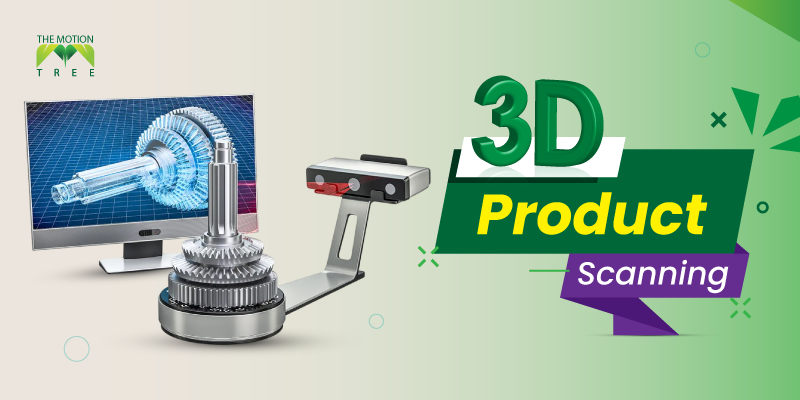
3D product scanning is the process of capturing a physical object’s exact size, shape, texture, and appearance to create a detailed, digital 3D model. Think of it as a digital twin, an accurate, interactive version of your product that customers can spin, zoom, and explore from every angle.Traditional photography is static. But 3D scanning gives you a living, breathing model. This is a huge step forward for e-commerce stores looking to stand out in an increasingly crowded market.
E-commerce has grown more in the last five years than in the previous twenty. With online sales projected to reach $5.89 trillion by 2029 (Statista). Brands must do more than list static images; they must recreate the in-store experience online. 3D product scanning is the next step.There are a few different methods of 3D product scanning, such as
This uses projected light patterns and cameras to calculate the object’s surface geometry. It’s fast, accurate, and great for small-to-medium products like shoes, bags, or tech gadgets.
A laser measures the distance between the scanner and the object to build a precise point cloud. It’s used for larger items or industrial applications. If you are using any Apple Pro Series iPhones starting from the 12 Pro Max to the latest, then you will get a LIDAR sensor built in. You can use that and do a 3D scan of any object.
Multiple high-res photos are taken from every angle. Using software experts, then stitches them into a 3D model. This method is more accessible for small studios but requires skilled editing to fill gaps and clean up the mesh. Unfortunately, even with the best scanners, raw models often have imperfections like holes, noise, and color inconsistencies. That’s why post-scan processing and texture map editing are crucial. The Motion Tree is one of those editing studios that I trust with such projects.
Many brands miss that raw scans aren’t enough. They need careful post-processing and expert editing to ensure the final 3D asset is accurate, optimized, and beautiful. That’s where an experienced image editing team makes all the difference. Here’s a peek into how the Motiontree team turns a raw scan into an e-commerce-ready 3D asset:
To get a complete view of the product, you might need multiple scans. For complex shapes, this can mean blending dozens of angles. Then you send those captures.
Then the experts remove stray points, fill holes, and reduce mesh density (without losing detail) so the model loads quickly online. This cleaning and optimization part is crucial. Without professional experience, it gets tough.
High-resolution textures are “wrapped” onto the mesh using UV maps. This ensures colors, labels, logos, or patterns look accurate.
Lighting and shadows play a vital role in making the product look realistic. So, the experts of the studio adjust baked-in lighting or reflections to match your brand style, no odd shadows or glare!
Whether you need.OBJ,.FBX,.GLTF, or USDZ for AR, studio ensures your models are ready for Shopify, Amazon, Meta, or custom apps.
In the process, sometimes your 3D product model can lack branding. Colors are matched to your real-life product or brand palette, so your online shoppers see exactly what they’re getting.
Famous brands like Nike, Puma, Adidas, and many more are showcasing their products in 3D and offering their customers features like virtual try-on. So the benefits that an online store gets are real. When, as a customer, you can see a product from every angle, it gives you confidence. Your shopping experience gets enhanced, and you can make purchase decisions more confidently. As an online retailer, that experience increases the customer return value a lot.
Speaking of return, on one hand, your customer return rate increases, and on the other hand, your product return rate gets reduced by a large margin. Only a fraction of brands currently use 3D product scanning, so early adopters stand out. Adding AR-ready assets future-proofs your product pages as immersive tech becomes mainstream. So, your conversion rate as a whole gets better automatically.
3D product scanning isn’t just for tech giants. From local boutiques to global fashion brands, many industries now use this technology:
3D scans bring clothes, shoes, and accessories to life, allowing virtual try-ons or 360° product views. Brands like ASOS and Nike have adopted 3D models to help shoppers choose the right fit.
Visualizing furniture in a buyer’s space is crucial. IKEA’s AR app lets shoppers place 3D models of furniture in their living rooms, reducing buyer hesitation and increasing sales.
Intricate details in rings, bracelets, or watches need close inspection. 3D scans showcase craftsmanship in stunning detail, enticing luxury buyers.
Car parts, machinery, and even entire vehicles are scanned for digital showrooms, training, and replacement parts catalogs.
Apart from these industries, online sellers on Amazon, Shopify, and Walmart are already using 3D scans to give customers an edge, building trust and driving higher conversions.
Enough of the benefits and stats, how about we do a comparison table between traditional product photography and 3D product scanning? From my experience, I tried to compare both of them in the table below
Now we know, unlike 2D product photography, 3D scanning preserves every angle and realistically showcases the product. Customers can virtually handle the product, such as rotate it, zoom in on materials, and even see how it might look in their environment. While the results are impressive, 3D scanning can pose challenges:
Costs vary depending on product size, complexity, and the level of editing required. We offer flexible packages — get in touch for a personalized quote!
We provide industry-standard formats like OBJ, FBX, STL, and glTF, compatible with most e-commerce and AR platforms.
Yes! We use specialized techniques and hybrid scanning to handle challenging materials.
Absolutely. With lower hardware costs and professional editing services like ours, small brands can now afford high-quality 3D models.
On average, it takes 1–2 days per product, depending on the complexity and number of revisions.
Using 3D product scanning, you can stand out in the crowd and boost your business by beating your competition. The major drawbacks of online shopping were that customers had to make purchasing decisions just by looking at static product photos. With 3D product scanning, business owners can give an immersive, realistic experience to customers.
1
2
3
April 7, 2026
6
April 3, 2026
7
April 3, 2026
8
10
April 3, 2026